
Traditional Bolognese Sauce
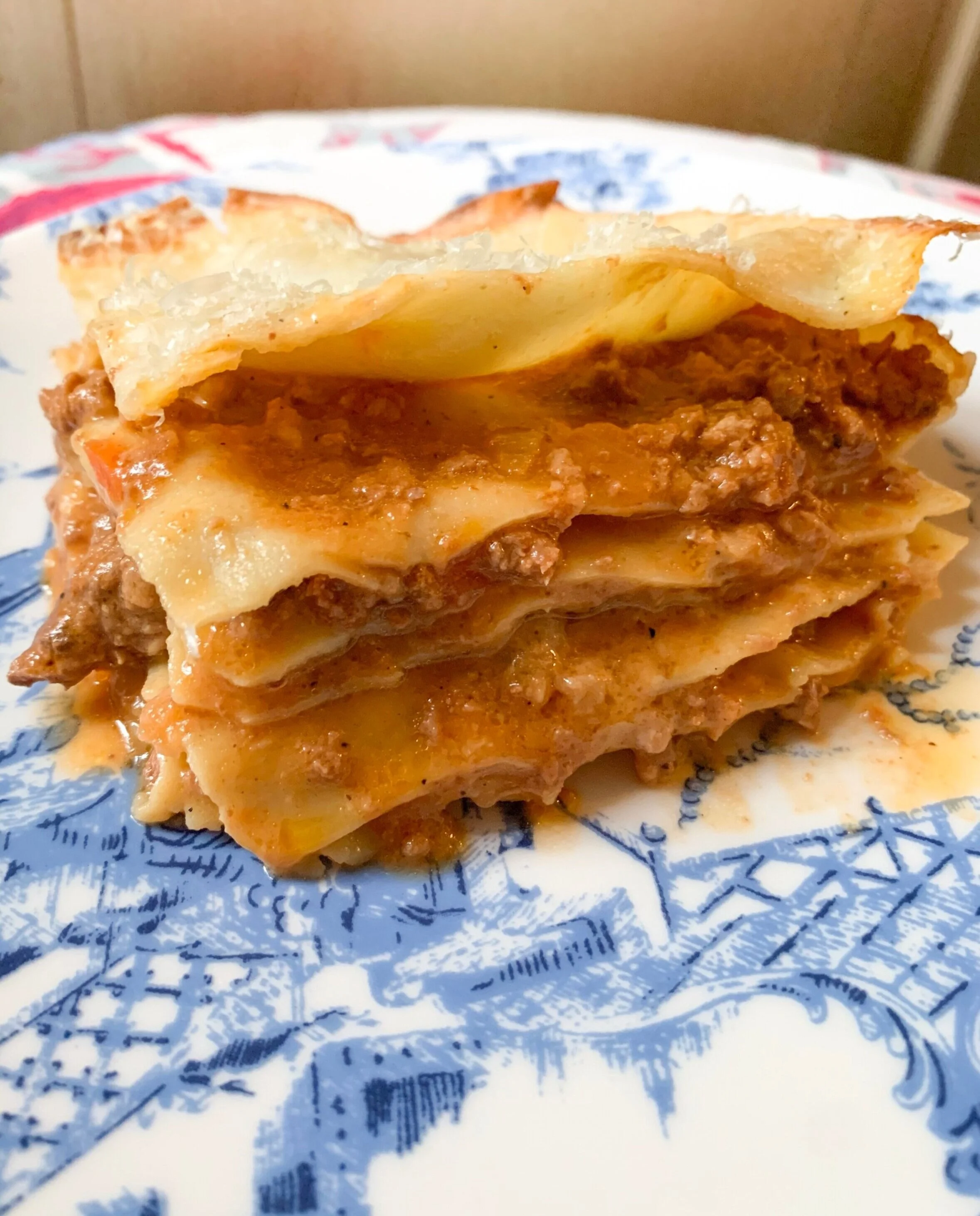
Traditional Bolognese sauce is one of my favorite things ever. Everyone in my family has their own recipe. My Aunt Meg’s recipe, which we eat every Christmas Eve, has become so ingrained in my flavor memory over the years that I knew immediately she had changed it this past holiday. When I was younger, I remember always doctoring my mom’s because she didn’t add the milk that the recipe traditionally calls for… so I would when she wasn’t looking. She also has long slivers of onion in hers, and my aunt has big chunks of carrot. Each recipe is so special, memorable, and belongs to each person. I am sharing mine, with the complicated step of veal stock that you can certainly skip and swap for beef stock. My Bolognese is amazing in lasagne, and if you feel like a challenge I will include those steps below, as well.
I have included a few of my favorite hacks for making this dish easy. Cascadian Farms frozen mirepoix bags squirreled away in my freezer have been wonderful. The quality of the diced frozen veggies is fantastic, there is no waste because I use one bag, and I am happy to not have to leave the house for produce, or chop that produce! If you can stockpile this mirepoix in your freezer, do it! It’s provides the base to so many recipes with convenience.
For meat, I used Porter Road, a national food delivery service that I highlighted in my previous post. I have used Porter Road for well over a year now, and I love their meat. Many of their cuts frequently run out online, even before the quarantine, but in a message they assured me they are now restocking daily and access to ground pork and dry-aged ground beef, both in this recipe, will remain unrestricted.
Gabbie’s Bolognese Sauce
1 bag Cascadian Farms frozen mirepoix
1-lb. Porter Road Ground Dry-Aged Beef
1-lb. Porter Road Ground Pork
8-oz. homemade veal stock (directions below or sub beef stock)
3 tbsp. veal fat or olive oil
1 c. whole milk
2 c. water added as needed
15-oz can Muir Glen tomato sauce
small dash nutmeg
2 cloves garlic (if you don’t make veal stock)
salt and pepper to taste
In a dutch oven, heat the 3 tbsp. veal fat or olive oil and add mirepoix. Sweat the mirepoix, you can speed this up by sprinkling with a pinch of salt, stirring the veggies so nothing browns. After 5-6 minutes, remove from the pot and set aside.
Add ground beef and ground pork, brown the meat mixture sprinkle with another pinch of salt. Layering seasoning at each step provides complex flavor. If you are not making the veal stock, add the garlic cloves to the meat when you see very little pink left and let the garlic become fragrant with the cooking meat.
Add the veggies back to the meat mixture and pour in one 15-oz can of Muir Glen tomato sauce. I love this brand and always have this size can on hand because it is perfect for quick sauces when you are making a pound of pasta. Continue to cook on high heat, stirring, and trying to caramelize the sauce a bit—as you would with tomato paste.
Add the veal or beef stock, one cup of water, and a dash of nutmeg. Stir it up and reduce the heat to the lowest setting on the weakest burner. Allow to cook for 2 hours covered, uncover and cook another 1.5 hours adding water as needed to have your desired consistency. I like this sauce to have plenty of liquid but the liquid to be rich and thick, not watery.
Veal Stock Recipe
3 veal chop bones, preferably with a bit of meat still attached!
5 cloves garlic
1 yellow onion
2 shallots
8 cups of filtered water
Cook uncovered for 8+ hours, adding water as needed, until bones are splitting and marrow has cooked out. Reduce almost to demi glace consistency, the color should be a rich dark brown. My veal bones came from a veal rack that I cooked. Recipe to come!
Basic Pasta Recipe + Lasagne Assembly
2+1/4 c. Semolina flour
3 large eggs + 1 yolk, save the last white in case you need more moisture
On a large clean surface pour out your flour. Create a well and crack the eggs into the well. Gently work the egg into the flour until it is incorporated. If there are still dry bits of flour hanging out and it’s too crumbly, lightly wet your hands and continue to knead the mixture until it comes together smoothly. Push the dough away from you, stretching it, do not force it down onto itself. Stretching the dough activates the gluten, and you should do this for 5-10 minutes until the dough feels silky and is giving. This is a tough dough, it shouldn’t be too flexible just yet. Let the dough rest covered with a wet paper towel for 30 minutes.
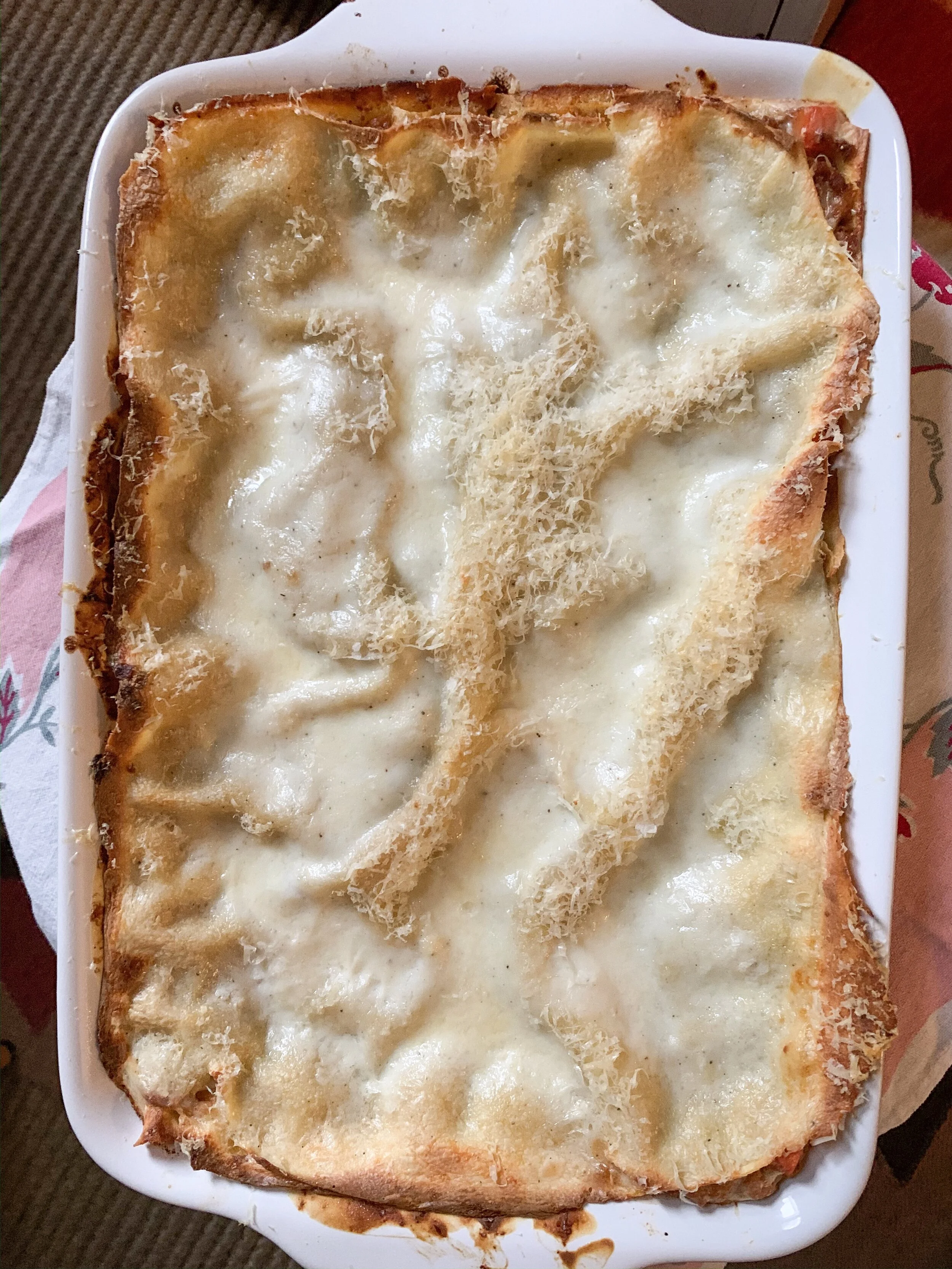
Separate into 8 balls a little bigger than a golf ball and smaller than a tennis ball. Roll each ball out into a large rectangle and use your baking dish as a template to cut the sheets. I assembled my lasagne with large single sheets all the way across. You can cut them into quarters, or however you think would most easily come together for you. My trick to getting the noodles extra thin was to roll them out, set them aside and let them rest, and then 10 minutes later I rolled them all out again trimming as I went until they were sheet thin.
When I assembled the lasagne I had all the components ready to the side, the bolognese, the bechamel, and a pot of heavily salted rolling boil water. I carefully blanched each sheet for 30 seconds and then moved it directly to the casserole, building each layer with a ladle of bolognese and a drizzle of bechamel, as I went. The noodles were delicate and difficult to drain, so I would make sure your bolognese is reduced to a thick consistency and your bechamel is equally thickened. Just bechamel and fresh grated Parmigiano-Reggiano grace the top and it baked for 25 minutes at 425 degrees.
Directions for bechamel can be found here, along with another great baked pasta recipe that I hope you enjoy!!